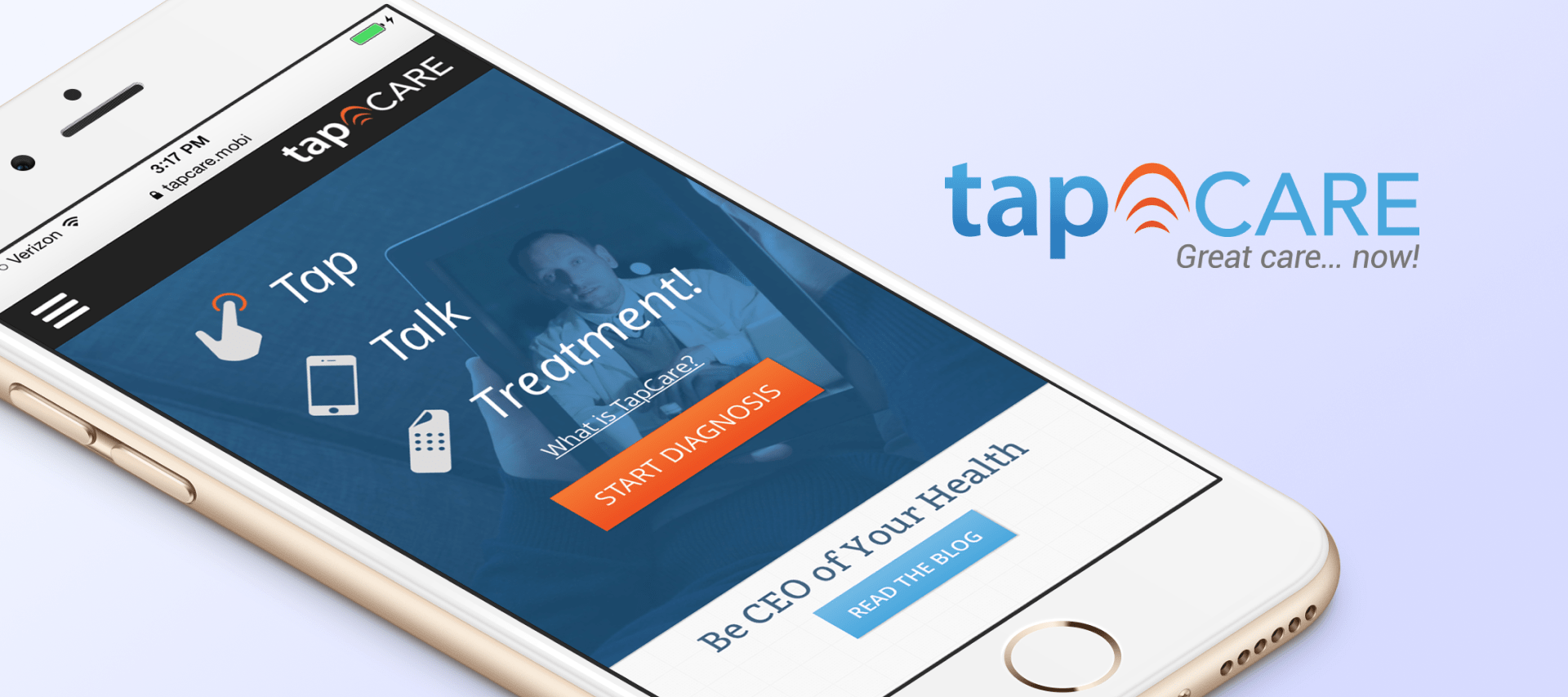
Case Study: TapCare Telehealth Web App
Overview
Before telehealth became mainstream, a local physician approached me with an idea: a mobile-first web app that could quickly screen and assess minor ailments, facilitate payments, and connect patients with a doctor via video. I designed and built the product, using WordPress as a backend CMS and a custom frontend to streamline the entire patient journey from symptom screening to diagnosis and payment.
Process
At a time when most telehealth services still relied on phone calls, we had to carefully guide users through an unfamiliar digital experience. Our design goals were:
- Clarity & Expectation-Setting: Patients needed to understand exactly what would happen at each step – how their symptoms would be reviewed, when they’d hear from a doctor, and what they were paying for.
- Efficiency: The workflow needed to be intuitive for users with no medical background, ensuring they could complete the process quickly and without confusion.
- Compliance & Security: Since this involved medical and payment data, we had to meet strict security standards while keeping the experience seamless.
I collaborated closely with the physician to translate his clinical screening process into a digital experience. Through multiple wireflow iterations, we refined a system that enabled patients to quickly narrow down their symptoms with the help of clear descriptions and imagery, answer key medical and personal questions, and complete payment — all in a matter of minutes.


Challenges
We faced a number of logistical challenges in getting this out in the wild, and I worked closely with the client to overcome those that came up.
- Insurance Barriers: Telehealth was new, and insurers weren’t covering independent services like this. To work around this, we designed a direct-payment model, targeting the cost of a typical co-pay to make it accessible.
- Scheduling Constraints: With only two physicians available at the beginning, we needed a way to communicate availability in real time. I built an admin tool that allowed the doctor to toggle their status, ensuring patients knew upfront whether they could expect a callback.
- State Licensing Restrictions: Since our first physicians were only licensed in Oregon and California, we built early-stage filters into the screening flow to divert out-of-state patients before they completed the intake process.
- Technical & Compliance Hurdles: Secure handling of patient data was critical. While managing the frontend experience, I brought in a healthcare IT consultant to identify compliance gaps and ensure our data flows met HIPAA regulatory standards.


Testing & Iteration
We tapped into our personal networks for usability testing, focusing on ease of navigation and clarity of instructions. One unexpected issue we uncovered was notification delays – messages weren’t reaching the physician in real time, breaking the promise of a quick response. This required a deep dive into the limitations of our CMS backend and how email data flows were handled. Recognizing this was outside my expertise, I consulted with a developer to optimize those email triggers and improve reliability.
Lessons Learned
This project reinforced the importance of anticipating operational and technical challenges early in the design process. I also gained firsthand experience in healthcare compliance, which shaped how I approach designing for sensitive, regulated environments today. After this project, I began building more contingency time into project roadmaps to account for the unforeseen technical challenges that inevitably arise in real-world implementation.
Outcome & Lasting Impact
While TapCare ultimately struggled to gain traction due to insurance limitations and lack of institutional backing, the design itself successfully streamlined the telehealth experience, proving that a structured, pre-screened workflow could reduce unnecessary doctor visits and improve efficiency.
Looking at modern telehealth solutions today, it’s clear that this same model could support AI-powered triage tools – guiding patients through structured assessments, flagging critical cases, and streamlining provider workflows. My experience designing TapCare’s patient journey has given me a strong foundation for leading AI-driven healthcare product design, applying the same principles of clarity, efficiency, and regulatory compliance.